

A Seamless High-End Home Remodel Begins with Elite Craftsmanship
What Defines a Luxury Renovation vs. Standard Remodeling?
A standard renovation focuses on surface updates—swapping worn countertops, repainting walls, or replacing outdated fixtures within an existing footprint. A high-end home remodel, by contrast, reimagines the property from the inside out. It addresses the architectural integrity, spatial flow, structural performance, and building envelope to create a cohesive living environment.
When we approach a major estate transformation, we look at how every system operates in harmony. Instead of working around structural limitations, luxury transformations often involve removing load-bearing walls, raising ceilings, and relocating plumbing and electrical infrastructure. To dive deeper into the technical scope of full-scale residential overhauls, explore our in-depth guide to high-end renovation services.
The Architectural Role and Design-Build Integration
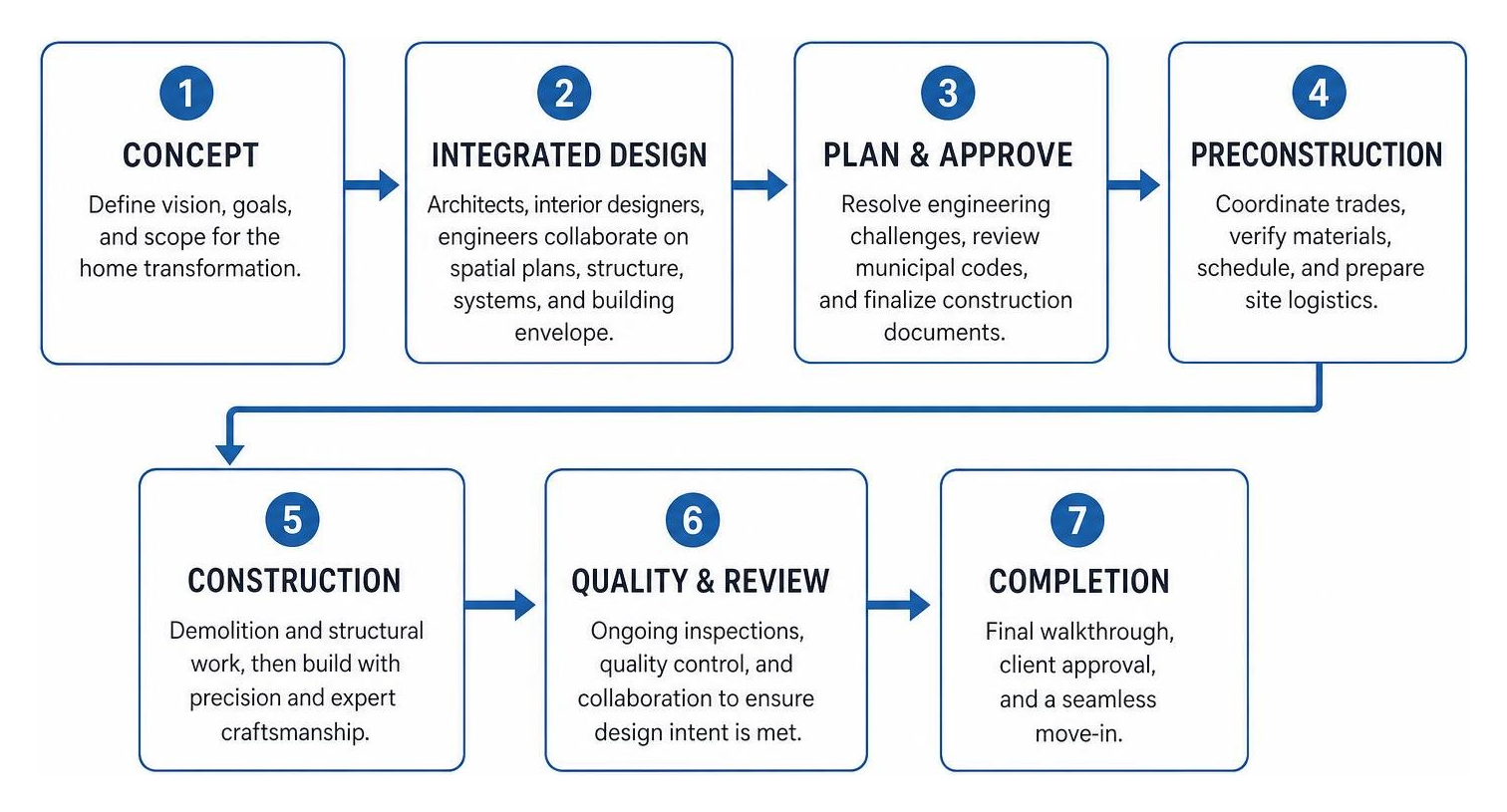
Achieving a flawless result requires early collaboration between architects, interior designers, structural engineers, and master builders. In standard remodeling, disconnected trades can cause miscommunication, budget overruns, and unexpected delays.
Through an integrated design-build methodology, your team resolves engineering challenges, reviews municipal zoning codes, and details construction assemblies before demolition starts. Whether opening sightlines between the kitchen and exterior living areas or executing a refined whole-home transformation, a unified design-build approach ensures that structural engineering and aesthetic choices work together seamlessly.
Premium Material Selection and Elite Craftsmanship
The defining mark of luxury construction is the caliber of materials and the skill of the artisans who install them. Standard off-the-shelf components are replaced with custom-fabricated elements designed specifically for your estate:
- Architectural Stone: Bookmatched marble slabs, honed quartzite counters with mitered waterfall edges, and seamless architectural limestone.
- Custom Millwork: Furniture-grade, ceiling-height cabinetry crafted from rift-sawn white oak, walnut, or custom lacquer finishes with integrated soft-close hardware.
- Artisan Finishes: Hand-applied Venetian plaster walls, custom metalwork, bespoke steel-framed interior partitions, and architectural reveals instead of standard baseboards.
- Engineered Flooring: Wide-plank European white oak with durable, low-VOC finishes installed over sound-dampening acoustic underlayments.
7 Most Sought-After Features in a High-End Home Remodel for 2026
Modern luxury renovations prioritize both refined aesthetics and effortless functionality. In 2026, homeowners are investing in spaces that promote wellness, support entertaining, and improve everyday convenience. For those interested in building a modern luxury home in Los Angeles, incorporating these architectural features creates an unmatched living experience.
Gourmet Chef Kitchens and Secondary Sculleries
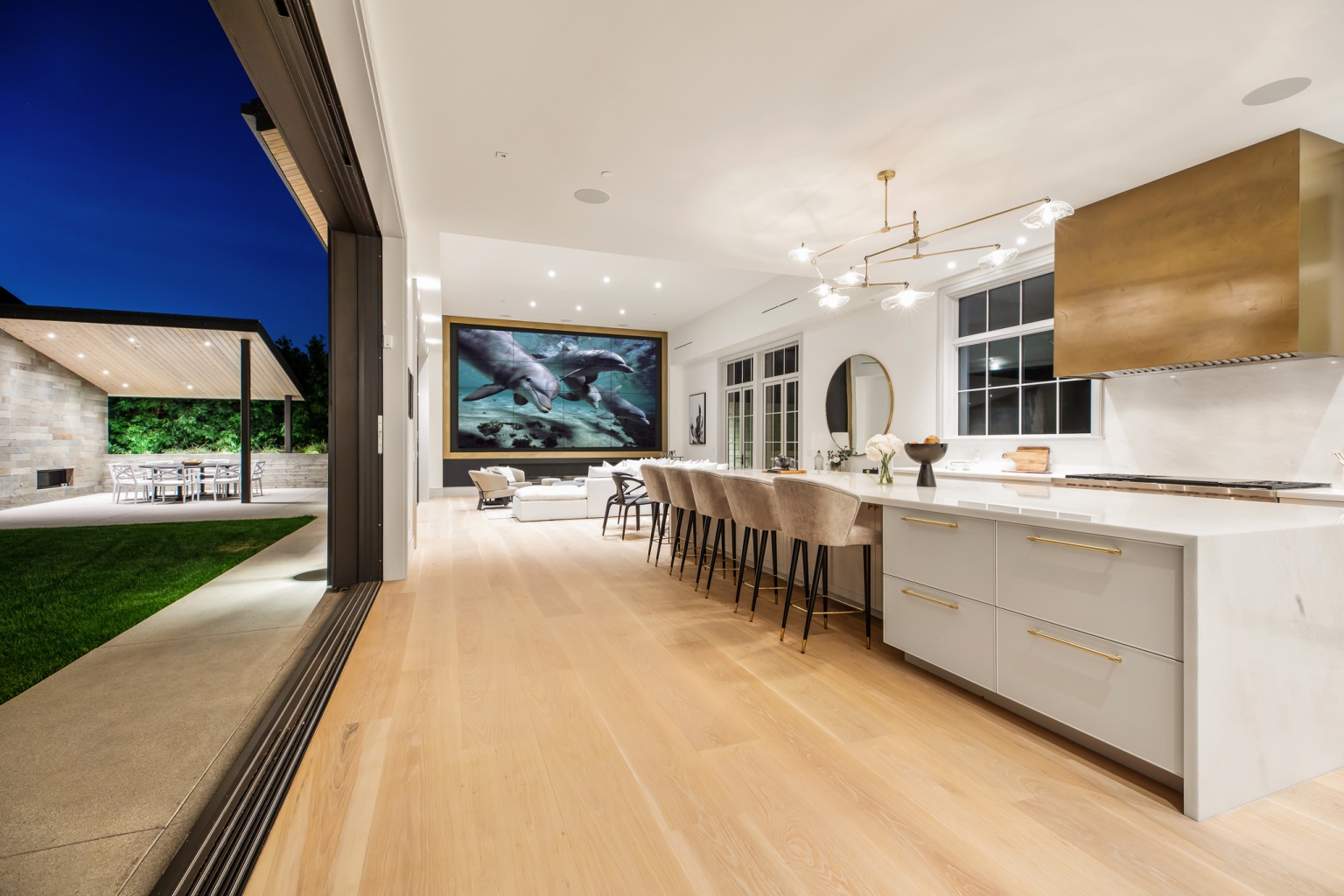
The kitchen remains the heart of the modern estate, accounting for roughly 28% of major renovation investments. Today’s premier kitchen layouts feature:
- Integrated Double Islands: One island dedicated to meal preparation with prep sinks and induction surfaces, while the second serves as an expansive casual dining and entertaining hub.
- Hidden Sculleries (Back Kitchens): Secondary prep kitchens equipped with secondary dishwashers, warming drawers, extra refrigeration, and pantry storage to keep the primary kitchen spotless while entertaining.
- Panel-Ready Luxury Appliances: Seamlessly flush-integrated Sub-Zero refrigeration, Wolf or Gaggenau induction cooktops, built-in steam ovens, and custom-ducted ventilation hoods.
- Return on Investment: High-end kitchen transformations consistently deliver strong financial returns, often recouping around 67% of project costs in direct resale equity.
Spa-Grade Primary Bathrooms and Wellness Sanctuaries
Primary bathrooms have evolved from functional washrooms into private wellness retreats designed for rejuvenation:
- Programmable Steam Showers: Complete with aroma-infusion therapy, integrated chromotherapy lighting, built-in teak or marble benches, and linear drains.
- Radiant Heated Flooring: Thermostatically controlled floor heating that extends directly into walk-in zero-threshold showers.
- Sculptural Soaking Tubs: Freestanding stone resin or cast-concrete tubs framed by floor-to-ceiling glass openings or private garden views.
- Smart Sanitary Fixtures: High-tech toilets featuring automated lids, integrated bidet functionality, self-cleaning UV sanitation, and heated seating.
Integrated Indoor-Outdoor Living and ADU Retreats
Maximizing the connection between interior spaces and exterior landscapes is a hallmark of luxury design:
- Motorized Pocket Glass Walls: Floor-to-ceiling glass panel systems that slide completely into exterior wall pockets, creating an uninterrupted transition to terraces and pools.
- Covered Outdoor Living Suites: Exterior living rooms complete with louvered pergolas, outdoor kitchens, pizza ovens, and radiant ceiling heaters for year-round entertaining.
- Accessory Dwelling Units (ADUs): Detached or semi-attached guest suites repurposed as private executive offices, art studios, or wellness gyms that provide flexible, multi-generational living options.
Whole-Home Smart Automation and Clean Energy Infrastructure
True luxury means your home anticipates your everyday needs. Modern smart home integration goes far beyond plug-in consumer gadgets:
- Centralized Lighting and Shading: Systems like Lutron HomeWorks automate circadian lighting scenes and motorized architectural solar shades.
- Climate and Acoustic Zoning: Multi-zone HVAC systems that integrate humidity control, hospital-grade HEPA filtration, and hidden architectural speakers.
- Clean Energy Resilience: High-capacity solar arrays paired with whole-home battery backup systems (such as Tesla Powerwall) ensure quiet, uninterrupted power.
Planning Costs, Budgets, and Timelines by Region
Understanding the financial landscape of a comprehensive renovation helps establish realistic expectations and avoid surprises during construction.
| Region / Market Type | Estimated Cost Per Sq. Ft. | Full-Home Remodel Investment Range | Typical Construction Timeline |
|---|---|---|---|
| Southern California (Los Angeles / Coastal) | $350 – $650+ / sq. ft. | $400,000 – $1,500,000+ | 6 – 14 Months |
| Northern California (Bay Area / Silicon Valley) | $400 – $750+ / sq. ft. | $450,000 – $1,800,000+ | 6 – 16 Months |
| East Coast Luxury Corridors (NJ, NY, CT) | $300 – $550+ / sq. ft. | $350,000 – $1,200,000+ | 5 – 12 Months |
| Mountain West Estates (Colorado Foothills, Aspen) | $325 – $600+ / sq. ft. | $375,000 – $1,350,000+ | 6 – 14 Months |
| Midwest Metro Corridors | $200 – $400+ / sq. ft. | $250,000 – $750,000+ | 4 – 10 Months |
Estimating Investment Tiers for a High-End Home Remodel
Renovation costs vary widely based on engineering demands, custom finishes, and site conditions. When budgeting for an upscale project, investment tiers typically fall into three broad categories:
- Single-Space Major Transformations ($75,000 – $250,000+): Focuses on a comprehensive structural kitchen overhaul or a master spa bathroom retreat with custom millwork, natural slab stone, and top-tier fixtures.
- Multi-Room / Whole-Floor Reconfigurations ($250,000 – $650,000+): Involves wall removals, updated MEP (mechanical, electrical, plumbing) systems, re-engineered living spaces, and unified hardwood flooring across an entire level.
- Full-Estate Gut Remodels & Expansions ($650,000 – $1,500,000+): Complete interior and exterior re-imagining, including structural additions, smart-home automation, roofline alterations, high-performance building envelopes, and tailored outdoor living integration.
To understand how rigorous pre-construction planning keeps large-scale budgets on track, read our guide on navigating luxury home construction without stress or budget blowouts.
Managing Timelines and Permitting in a High-End Home Remodel
A common misconception is that remodeling moves quickly from contract to construction. In reality, thorough luxury projects require a dedicated 3-to-6-month pre-construction phase before on-site work begins:
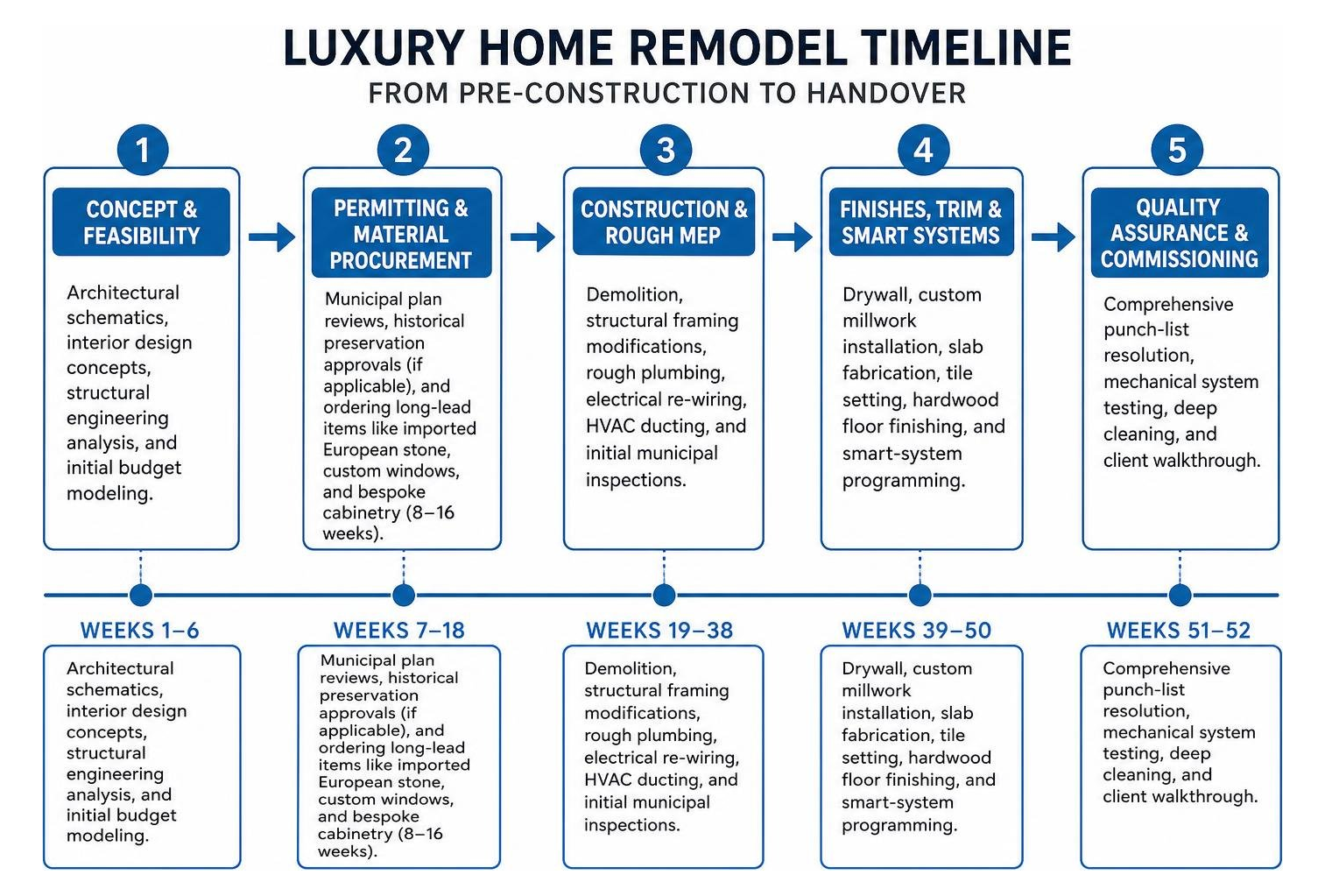
- Phase 1: Concept & Feasibility (Weeks 1–6): Architectural schematics, interior design concepts, structural engineering analysis, and initial budget modeling.
- Phase 2: Permitting & Material Procurement (Weeks 7–18): Municipal plan reviews, historical preservation approvals (if applicable), and ordering long-lead items like imported European stone, custom windows, and bespoke cabinetry (which often require 8 to 16 weeks).
- Phase 3: Construction & Rough MEP (Weeks 19–38): Demolition, structural framing modifications, rough plumbing, electrical re-wiring, HVAC ducting, and initial municipal inspections.
- Phase 4: Finishes, Trim & Smart Systems (Weeks 39–50): Drywall, custom millwork installation, slab fabrication, tile setting, hardwood floor finishing, and smart-system programming.
- Phase 5: Quality Assurance & Commissioning (Weeks 51–52): Comprehensive punch-list resolution, mechanical system testing, deep cleaning, and client walkthrough.
Selecting the Right Team and Navigating Common Remodeling Pitfalls
The success of your project depends largely on the builder you choose. Luxury remodeling requires master craftsmanship, clear fiscal controls, and transparent communication.

When evaluating potential builders, look for teams with experience in complex custom builds. For a deeper breakdown of contractor vetting standards, review our criteria on choosing the right high-end residential builders for complex custom estates.
Critical Questions for Luxury General Contractors
Before signing a construction contract, ask prospective builders these essential questions:
- Are you licensed, bonded, and carry comprehensive general liability and workers’ compensation insurance? Verify license standing and check for clean safety records.
- Do you rely on dedicated in-house project managers or rotate staff across jobs? Having a dedicated project manager on site daily ensures consistent quality and clear accountability.
- How do you manage client communication and daily project logs? Leading builders use cloud-based construction platforms (such as Buildertrend or CoConstruct) to provide real-time schedule updates, progress photos, and budget tracking.
- What is your change order procedure? No change order should move forward without a written scope, itemized material/labor costs, and explicit client sign-off.
- Can you provide references from projects completed over the last 12 to 24 months? Speaking with past clients gives you direct insight into how the team handles unexpected challenges and meets deadlines.
Avoiding Costly Scope Creep and Structural Surprises
Even the most carefully planned renovations can reveal surprises once walls are opened. Hidden plumbing leaks, outdated knob-and-tube wiring, structural sagging, or improper past work must be resolved to meet current building codes.
To protect your budget, maintain a 10% to 15% contingency reserve. Reputable builders use advanced 3D laser scanning and exploratory demolition during pre-construction to inspect structural assemblies early, minimizing unforeseen costs during framing.
Frequently Asked Questions About Luxury Home Remodeling
Is it better to remodel an existing luxury home or build new?
Remodeling is often ideal if your estate sits on a prime lot with mature landscaping, established neighborhood character, or favorable zoning grandfathering that would be lost with new construction. However, if the existing foundation is compromised or the desired floor plan requires altering more than 75% of load-bearing walls, a ground-up build may be more cost-effective.
Can homeowners remain in the residence during a major remodel?
For single-room renovations or detached guest suites, remaining on-site is possible with proper dust barriers and negative-air HEPA scrubbers. However, for whole-home renovations involving structural work, utility shutdowns, or flooring replacements, we strongly recommend temporary off-site accommodations. This ensures your family’s safety and comfort while allowing the construction team to work without interruption.
What is the expected return on investment for high-end renovations?
Well-executed luxury home remodels in prime real estate markets typically recoup between 60% and 90% of their investment upon resale. Upgrades like gourmet chef kitchens, spa-like primary suites, and seamless indoor-outdoor living spaces generate the highest appraisal returns while delivering immediate lifestyle enjoyment.
Conclusion: Elevating Your Living Space with Uncompromising Quality
A successful luxury renovation requires more than simply selecting high-end finishes. It demands meticulous architectural planning, structural precision, sustainable building practices, and clear project management from start to finish.
At Scanlon Construction, we bring over 30 years of elite craftsmanship, green building expertise, and close collaborations with leading architects to every custom estate and luxury renovation we build across Los Angeles. Whether you are reconfiguring an iconic mid-century modern home, expanding a hillside estate, or crafting a spa-inspired primary wing, our dedicated team delivers an organized, transparent experience from initial concept to final walkthrough.
Take the first step toward transforming your home. Explore our architectural portfolio, learn more about our comprehensive residential design-build services, review our past estate projects, or contact our team today to begin planning your renovation with Scanlon Construction.