

Navigating Luxury Home Construction Without Stress or Budget Blowouts
Choose a Luxury Contractor Who Plans as Carefully as They Build
To choose among high end residential contractors, look for a proven fit with your home type, a detailed pre-construction plan, clear cost reporting, and experience working closely with architects and interior designers. The right partner should show how they manage custom materials, permits, specialty trades, schedule risks, and change requests before construction begins.
For a bespoke Southern California home or major renovation, ask each finalist for:
- A portfolio of projects with comparable scale, design style, and site conditions.
- An itemized scope and a clear explanation of how allowances, changes, and contingencies are handled.
- A named project lead and a regular system for schedule, budget, and photo updates.
- Evidence of quality control, proper licensing and insurance, and relevant credentials for the work.
- A plan for sustainable materials, efficient systems, and long-term maintenance.
Luxury construction is not simply standard building with more expensive finishes. It depends on precise coordination: custom millwork, stone, lighting, smart-home systems, structural work, and artisan finishes must all arrive and fit together at the right time. A strong contractor protects the design vision while making honest, early decisions about cost and constructability.
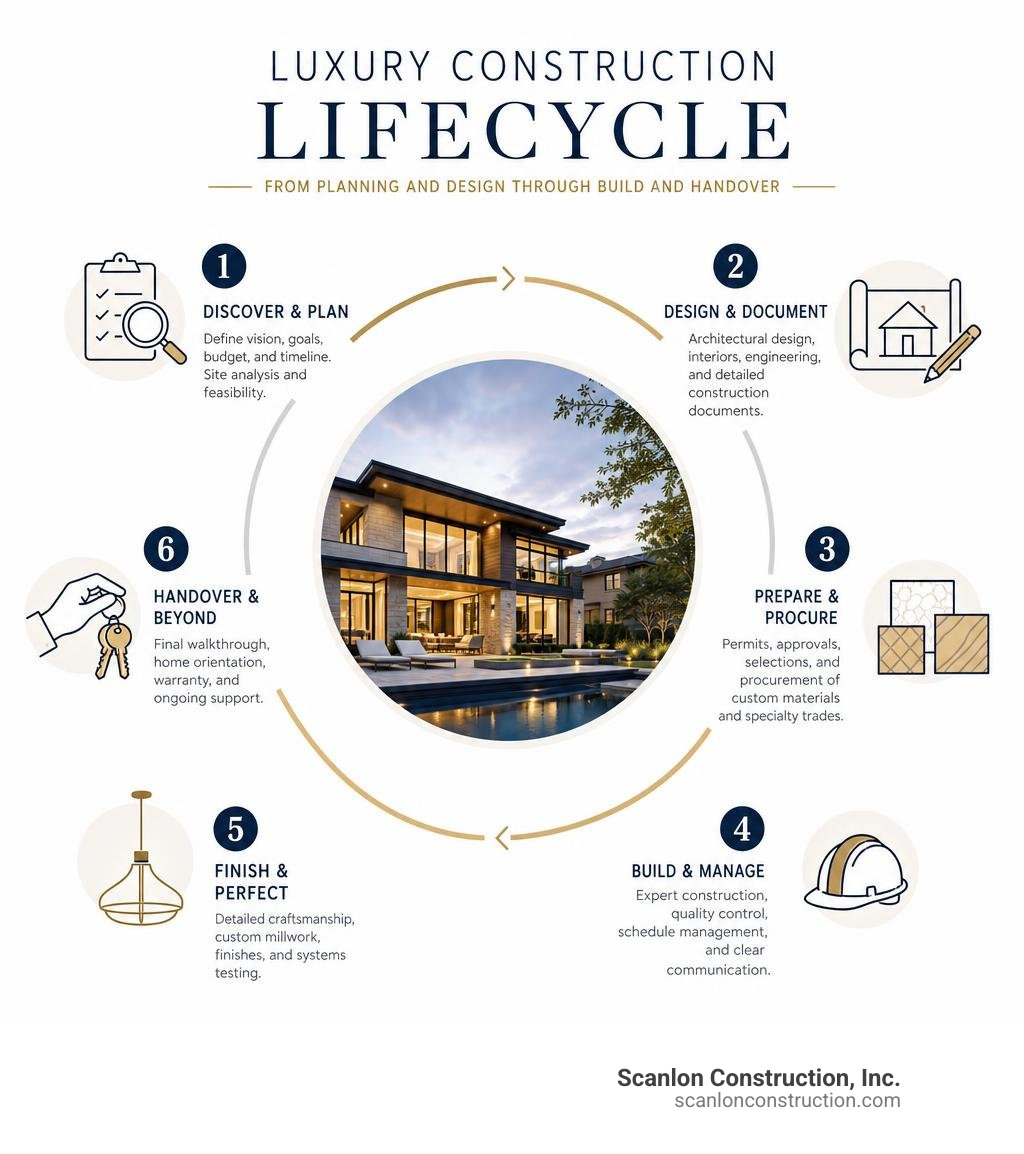
That matters because late design changes, unclear selections, and weak trade coordination are common causes of budget pressure. The best teams create a disciplined path from feasibility through final walkthrough, so clients can make informed choices without losing control of the result.
What Sets High End Residential Contractors Apart from Standard Builders
The fundamental difference between volume builders and elite custom builders lies in intentionality, trade mastery, and client communication. While standard contractors focus on speed, repeatable assemblies, and standard off-the-shelf materials, luxury builders operate at the intersection of structural engineering and fine art.
The U.S. residential construction market is projected to reach $1.2 trillion by 2030, with high-end custom homes and major architectural remodels representing a rapidly growing share. In fact, high-end renovation spending surged by 22% year-over-year in 2024 alone, reflecting unprecedented demand for bespoke fabrication, intelligent home automation, and sustainable materials.
Executing at this caliber requires an entirely different operational model. High-end building demands deep trade relationships, precision tolerance thresholds (often measured in sixteenths of an inch rather than quarters), and dedicated project management infrastructure.
| Feature / Standard | Standard General Contractors | High-End Residential Contractors |
|---|---|---|
| Material Sourcing | Standard lumber yards, off-the-shelf retail supply chains | Direct-from-quarry stone, FSC-certified reclaimed timbers, custom architectural extrusions |
| Tolerance & Detailing | Industry baseline (1/4″ tolerances), standard stock trim | Fine-tolerance joinery (1/16″ or less), concealed flush reveals, knife-edge details |
| Trade Specialists | Generalist subcontractors and rotating crews | Master artisan collectives (fine plasterers, master stone masons, bespoke bench-joiners) |
| Project Transparency | Paper invoices, fragmented texts, irregular change orders | Centralized digital client portals, live photo streams, real-time budget tracking |
| Architectural Integration | Strict adherence to 2D plans without constructability reviews | Proactive pre-construction collaboration, 3D clash detection, value engineering |
| Post-Handover Support | Standard 1-year statutory warranty | White-glove seasonal maintenance, estate manuals, 24- to 48-hour punch-list turnaround |
Master Craftsmanship and Bespoke Artisan Fabrication
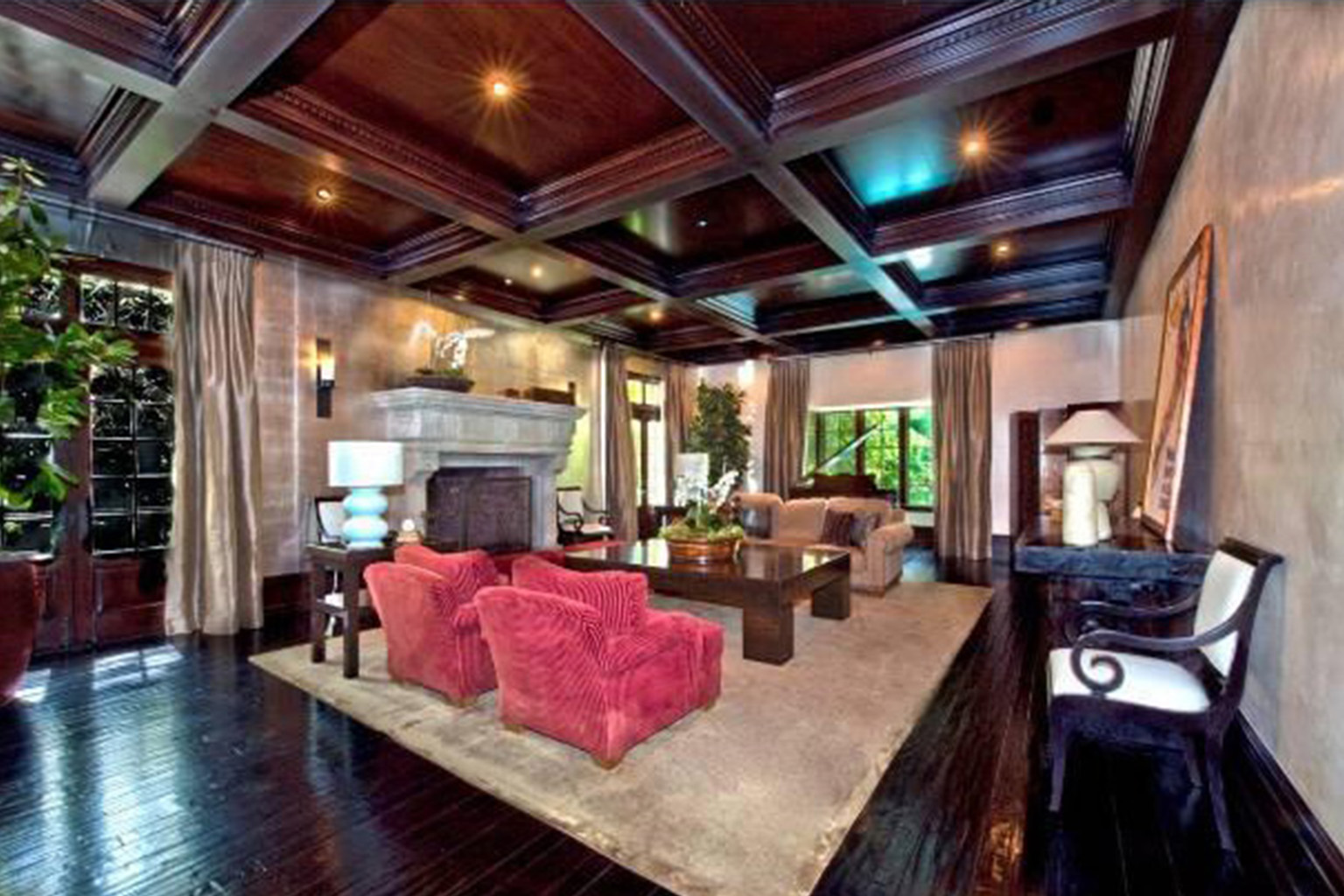
In a high-end residence, the finishes are not decorative afterthoughts; they are intrinsic to the home’s architectural story. Bespoke millwork, for example, often accounts for a substantial portion of a luxury interior package. This includes floor-to-ceiling book-matched walnut paneling, custom-curved white oak staircases, concealed pivot doors, and custom-integrated cabinetry built off-site in specialized artisan workshops.
Beyond woodwork, luxury builds rely heavily on master artisans capable of executing complex specialty finishes:
- Architectural Plasterwork: Multi-story hand-troweled fluted plaster, polished Venetian plaster, and natural limewash applications that add subtle organic texture while maintaining breathable wall assemblies.
- Book-Matched Stone & Slab Fabrication: Sourcing contiguous slabs of rare marble or Brazilian quartzite directly from quarries, ensuring vein continuity across waterfall islands, feature fireplace surrounds, and floor-to-ceiling shower enclosures.
- Ornamental Detailing & Concealed Hardware: Custom-cast architectural hardware, hand-carved ornamental ceiling medallions, and knife-edge architectural baseboards with recessed reveals that require millimeter-level framing precision.
Architect and Designer Collaboration for Complex Blueprints
Executing high-design projects requires seamless synergy between the general contractor, the licensed architect (often AIA or AD100-recognized firms), and the interior design team. Top-tier builders do not simply interpret architectural plans; they act as the constructability filter that brings complex, gravity-defying concepts into reality.
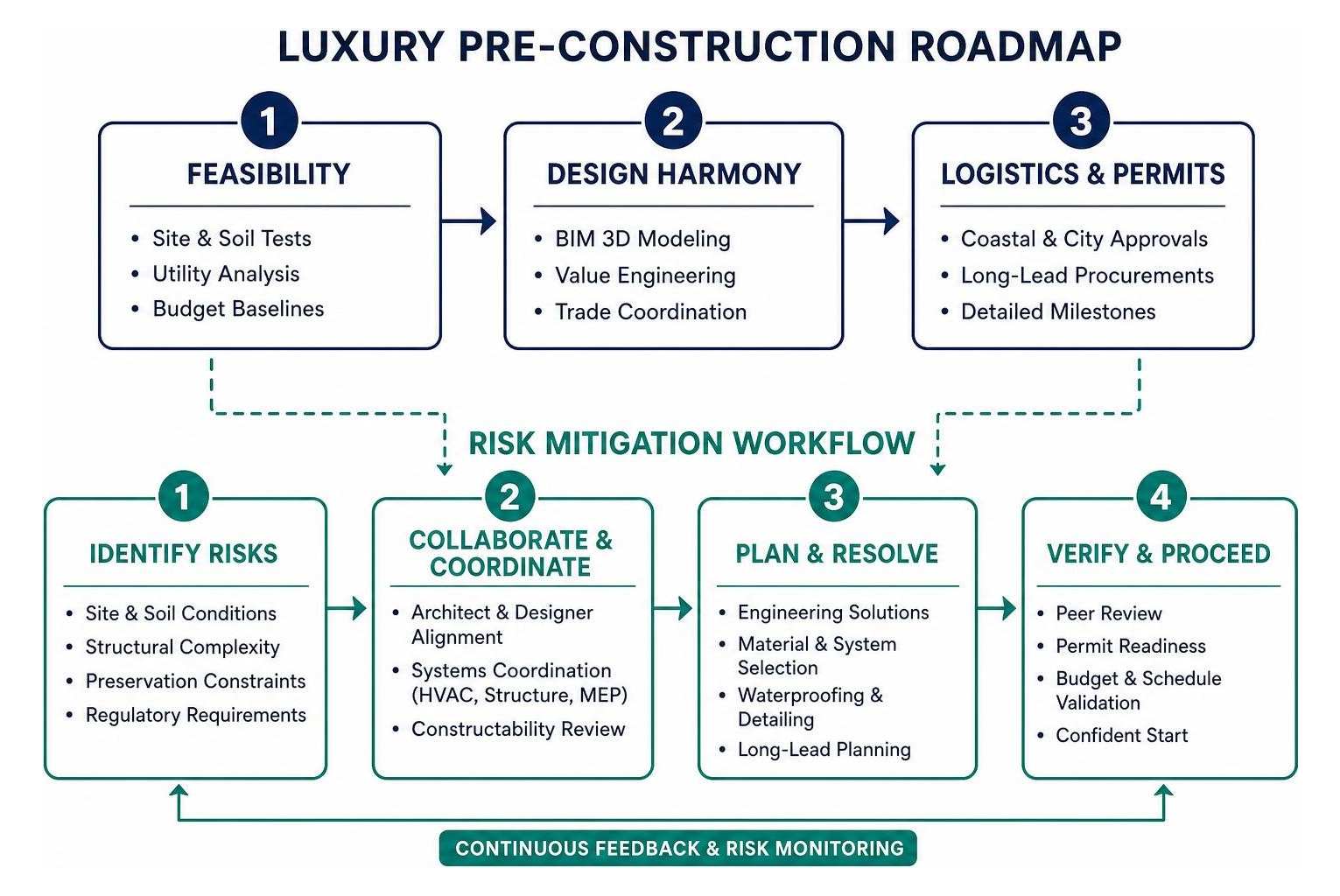
When an architectural plan calls for cantilevered steel structures, glass curtain walls, or flush zero-threshold pocket doors that transition seamlessly between indoor and outdoor living areas, the builder must resolve complex mechanical, structural, and waterproofing challenges behind the scenes. Through our comprehensive custom home building services, we facilitate intensive pre-construction coordination meetings with the design team. This ensures that HVAC distribution chases, structural steel beams, and motorized shading systems are fully coordinated before breaking ground, eliminating costly rework in the field.
Navigating Project Complexity: Historic Restorations and Modern Builds
Whether you are embarking on the meticulous preservation of a historic estate or the ground-up construction of an ultra-modern coastal residence, high-end construction requires navigating deep site and structural complexities.
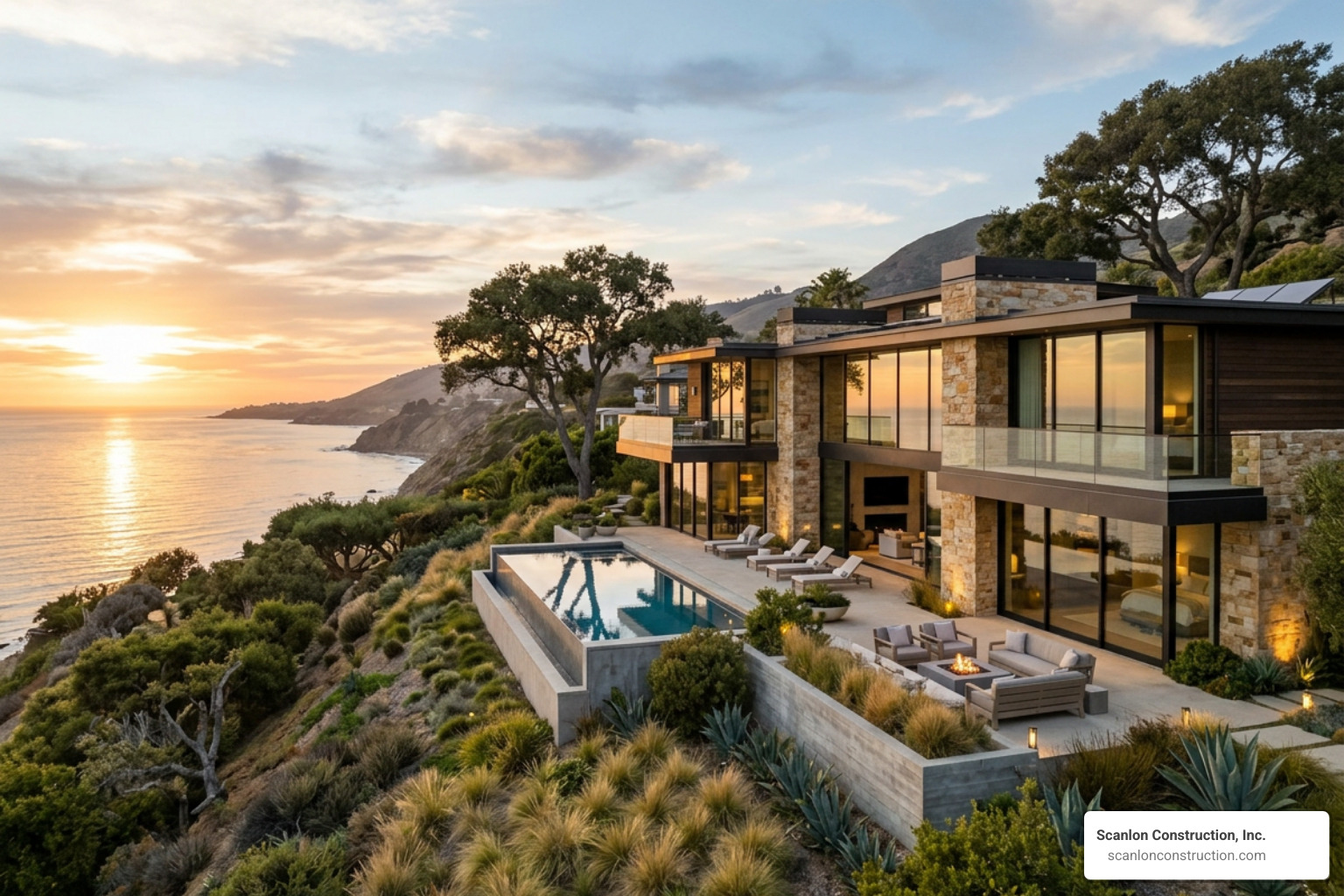
From coastal environmental impact reviews and strict neighborhood preservation zones to complex soil conditions, every site demands a customized approach. For homeowners planning a new estate from the ground up, our guide to Building on Your Own Land walks through the critical site selection, grading, utility feasibility, and civil engineering steps necessary before laying a foundation.
Balancing Preservation with Contemporary Luxury
Renovating vintage, historic, or heritage homes requires a delicate balance between preserving architectural character and integrating modern infrastructure. Historic estates—whether a 1920s Spanish Revival, Mid-Century Modern architectural icon, or historic Craftsman—often present hidden challenges: unreinforced masonry, archaic electrical runs, and out-of-square framing.
Master luxury builders specialize in:
- Preserving and Replicating Period Details: Restoring hand-carved wood corbels, original plaster crown moldings, historic stone mantels, and period-accurate ironwork using traditional artisan techniques.
- Discreet Infrastructure Concealment: Routing high-velocity, multi-zoned HVAC ducting, smart home wiring, and acoustic insulation through tight ceiling chases and behind historic plaster without compromising architectural proportions.
- Structural Retrofitting: Inconspicuously reinforcing foundational footings, upgrading seismic bracing, and integrating modern shear walls behind original interior finishes.
Resilient and Disaster-Responsive Construction
In regions like Southern California, high-end residential building must also account for extreme environmental factors, including seismic activity, steep hillside topography, and wildland-urban interface fire zones.
Disaster resilience is built into the home’s DNA through:
- Non-combustible architectural exterior materials (slate roofing, fiber-cement panels, fire-rated exterior cladding).
- Ember-resistant eaves, motorized exterior fire shutters, and dedicated on-site water storage with auxiliary pump systems.
- Deep-caisson foundations and grade-beam engineering tailored to steep coastal canyon terrain.
Following severe environmental events, specialized reconstruction teams manage everything from hazardous site remediation to accelerated permitting. Our direct work on the Pacific Palisades Fire Rebuild and comprehensive Woolsey Fire Home Repair and Renovation projects highlights the importance of pairing fire-resilient engineering with uncompromising luxury design.
Preventing Budget Blowouts and Schedule Delays in Luxury Renovations
Budget overruns and extended timelines are the two greatest concerns for clients entering a luxury renovation or custom build. In high-end construction—where bespoke finishes and complex structural engineering are standard—uncontrolled allowances and late design decisions can quickly escalate costs.
The average cost of a luxury home renovation in major urban and luxury markets ranges from $500 to over $1,500 per square foot, with bespoke millwork and stonework alone frequently accounting for up to 40% of the total budget. Keeping these substantial investments aligned with the original pro forma requires strict procedural discipline.
How High End Residential Contractors Manage Budgets and Timelines
Professional luxury builders maintain financial and schedule control through standardized project management protocols:
- Itemized Pre-Construction Cost Breakdown: Rather than relying on lump-sum estimates with vague allowances, we produce comprehensive, line-item estimates that account for every single fixture, structural component, and artisan labor trade.
- Contract Structure Clarity: Establishing the right contract vehicle early—whether a Cost-Plus arrangement with open-book transparency or a Guaranteed Maximum Price (GMP) model with structured contingency caps—ensures all parties share clear expectations.
- Supply Chain and Long-Lead Procurement: Elite contractors order long-lead items (imported stone slabs, European custom windows, bespoke plumbing fixtures) during the pre-construction phase to ensure materials are warehoused on-site well before crews need them.
- Digital Dashboard Tracking: Cloud-based client management platforms provide real-time updates on milestones, daily job site logs, budget allocations, and change order sign-offs, keeping homeowners fully informed regardless of where they are in the world.
The Design-Build Model for Streamlined Project Delivery
To minimize administrative friction and communication gaps, over 60% of luxury homeowners now prioritize hiring an integrated design-build firm.
In traditional fragmented models, the homeowner contracts separately with an architect and a general contractor. If structural or cost challenges emerge mid-construction, this separation can lead to finger-pointing, expensive change orders, and schedule delays.

Under a unified design-build approach:
- Single-Source Accountability: The architect, engineers, interior designers, and master builders operate as a single coordinated team under one contract.
- Continuous Cost Modeling: As the architectural concepts develop, the construction management team provides real-time pricing feedback, preventing “over-designing” beyond the client’s target budget.
- Accelerated Delivery Timelines: Early procurement and site preparation can begin while final decorative details are being finalized, significantly reducing the overall project delivery schedule.
Vetting and Selecting the Right Luxury Building Partner
Hiring a custom builder is one of the most significant financial and personal commitments an estate owner will make. A successful build depends not only on technical craftsmanship, but also on communication, financial integrity, and personal rapport.
Take the time to thoroughly review completed luxury residential projects to evaluate the builder’s range across diverse architectural styles—from minimalist modern estates to intricately detailed historic restorations.
Essential Credentials for High End Residential Contractors
Elite contractors should hold proven industry credentials, strict safety certifications, and robust quality management frameworks:
- State Licensing and Comprehensive Insurance: Active general contractor licensing with extensive general liability, umbrella coverage, and full workers’ compensation policies.
- Environmental & Safety Certifications: EPA Lead-Safe certification (essential for homes built prior to 1978) and OSHA compliance standards.
- Industry Accreditations: National Kitchen and Bath Association (NKBA) remodeling accreditations, formal quality management protocols such as ISO 9001:2015, and Better Business Bureau (BBB) standing.
- Sustainable Building Credentials: Certified green building professionals skilled in LEED for Homes, Passive House standards, and California Title 24 energy compliance. Nearly 75% of high-end builders report that luxury clients now actively request sustainable and ethically sourced materials, including reclaimed wood, low-VOC finishes, and high-performance building envelopes.
Evaluating Remote Management and Client Experience
Many luxury homeowners manage their builds while living across the country or traveling internationally. A builder’s communication infrastructure must support seamless, stress-free remote oversight.
During your interviews, evaluate:
- Digital Communication Protocols: Does the builder provide structured weekly video walkthroughs, high-resolution digital photo logs, and cloud-based approval workflows?
- Contractor Bedside Manner & Adaptability: How does the team handle unforeseen site discoveries or mid-project design changes? A calm, solution-oriented approach keeps the building process collaborative rather than stressful.
- Post-Handover Punch-List Execution: Elite builders maintain a dedicated customer care team that resolves final move-in punch-list items within 24 to 48 hours and provides ongoing seasonal estate maintenance support.
Frequently Asked Questions About Luxury Residential Construction
How much does a luxury residential renovation cost per square foot?
Luxury home renovations typically range from $500 to over $1,500 per square foot, depending on location, structural complexity, and finish selections. High-end ground-up builds can exceed these numbers when incorporating complex hillside foundations, subterranean basements, or specialized exterior envelopes.
Key factors driving luxury square-foot costs include:
- Bespoke, shop-built architectural millwork and integrated cabinetry.
- Rare imported natural stone, book-matched slabs, and custom tilework.
- Structural modifications such as removing load-bearing walls for expansive glass spans.
- High-performance mechanical systems, multi-zoned smart HVAC, and museum-grade architectural lighting.
What is the benefit of hiring a design-build firm over separate architects and contractors?
The design-build model brings the architect, interior designer, engineers, and construction managers under a single coordinated umbrella. This structure provides several major advantages:
- Elimination of the Communication Gap: Design intent and constructability are aligned from day one.
- Accurate, Early Budgeting: Builders price materials and structural requirements throughout the design phase, eliminating budget surprises after blueprints are completed.
- Faster Project Schedules: Permitting preparation, site feasibility, and long-lead material procurement overlap with design finalization, saving months compared to traditional linear workflows.
- Single Point of Responsibility: Homeowners interact with one dedicated project executive rather than mediating between separate design and construction teams.
How do luxury builders incorporate sustainable and eco-friendly practices?
Modern luxury construction seamlessly integrates sustainability without sacrificing comfort or design elegance:
- Ethical and Sustainable Materials: Sourcing FSC-certified lumber, reclaimed vintage architectural timbers, low-VOC zero-emission paints, and natural mineral-based plasters.
- High-Performance Building Envelopes: Continuous exterior insulation, triple-pane thermally broken window systems, and precision air-sealing that significantly lower heating and cooling energy demands.
- Renewable Energy and Smart Storage: Seamlessly integrated solar arrays, whole-home battery backup systems, and high-efficiency heat pump mechanical systems.
- Water Conservation & Landscaping: Advanced greywater recycling systems, drought-tolerant native plantings, and high-efficiency drip irrigation.
Conclusion
Building or renovating a luxury residence should be an exciting and rewarding journey of artistic expression and architectural craft. By selecting a builder who prioritizes thorough pre-construction planning, transparent financial reporting, and master-level trade execution, you protect both your investment and your peace of mind.
At Scanlon Construction, Inc., we bring over three decades of premier custom home building, sustainable design-build expertise, and seamless architectural collaboration to every estate we craft across Southern California. When you are ready to bring your architectural vision to life with precision, transparency, and enduring quality, our team is here to guide you every step of the way.